● A weekly research bulletin · est. 2026

The evidence behind what works.

We read the whole sports medicine, rehab & performance literature every week, critically appraise the papers that matter, and tell you what to do about them.

★★★★★ Built for physiotherapists, sports doctors & S&C coaches.

Endurance athletes competing
appraised · not summarised
250
papers screened / week
7
selected for the issue
0
landmark paper paired
018
current issue
01

Summaries are everywhere. Judgement is rare.

the method

Most feeds tell you what a paper said. We tell you whether it’s any good, how big the effect really is, and whether it should change what you do on Monday.

1 FIND

Every journal, every week

We harvest new and landmark research across sports medicine, rehab & performance, the whole literature, not a hand-picked handful, ranked by citation and field-weighted impact.

2 APPRAISE

Critically, not credulously

Each paper gets the same rigorous read: risk of bias, effect size vs. clinical significance, the gap it doesn’t fill, and the landmark study it builds on or contradicts.

3 REVIEW

Reviewed before it’s published

Nothing ships on autopilot. Every issue is reviewed before it’s published, the same structured appraisal, applied consistently, every week. Rigour is the product.

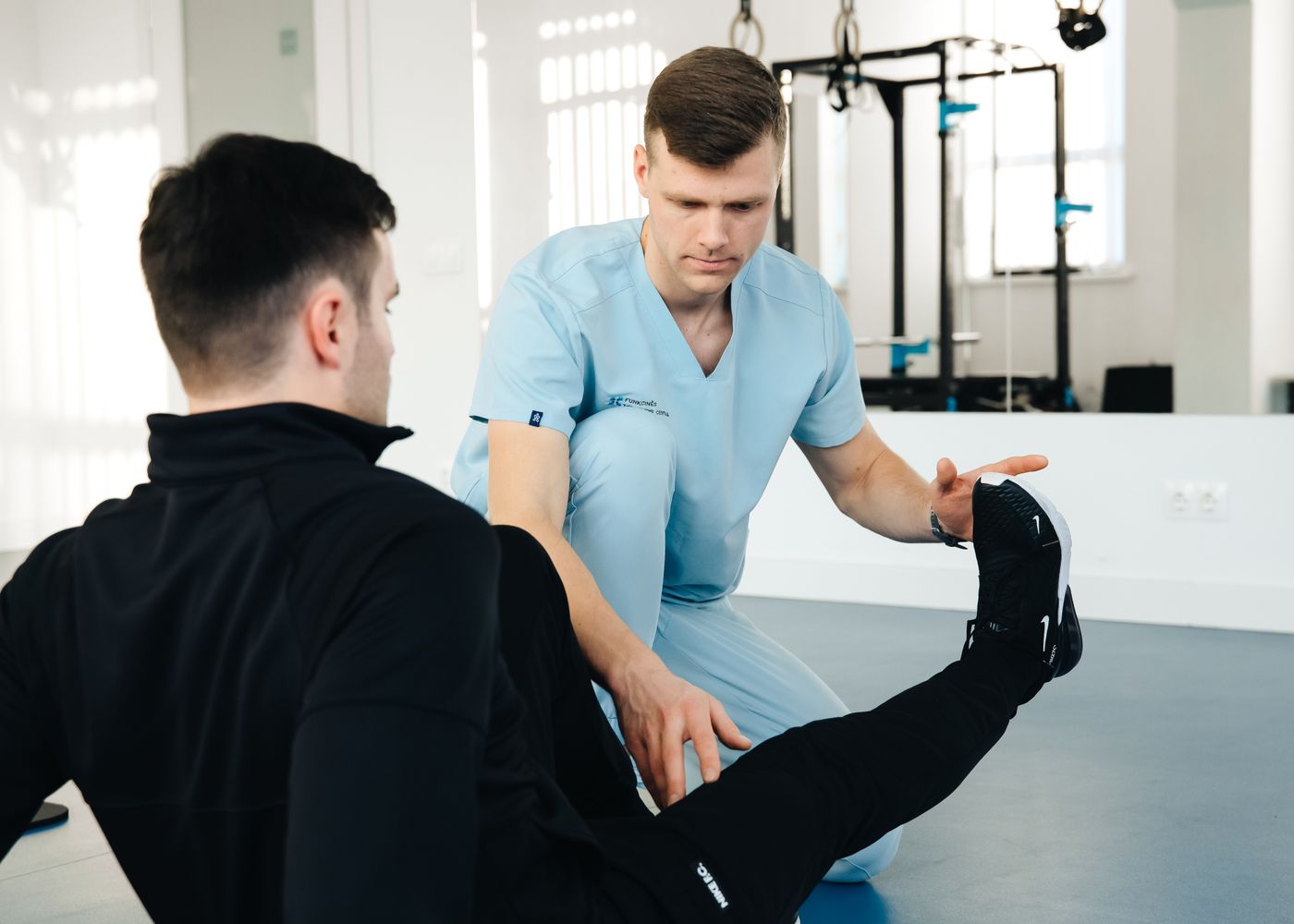
Clinician assessing an athlete

● signal ÷ noise

We read 200+ papers so you read 5.

The ones that matter, plus the one that’s overhyped, appraised for what they actually change in the clinic and on the field.

02

The lead

issue 018 · 23 Nov 2026

One paper, appraised. The same seven-field record every week, learn the shape once, read fast forever.

Sports medicine - open · 2026
Comparative Effects of Different Neuromuscular Training Modalities and Doses on Lower-Limb Injury Prevention in Athletes: A Systematic Review and Meta-analysis
Sports & Exercise MedicineStrength & ConditioningPhysiotherapyInjury prevention & screeningLoad management
Worth knowing
The paper
Systematic review and meta-analysis of 27 RCTs (n=27,663 athletes) comparing neuromuscular training to control for lower-limb injury prevention.
Found
NMT reduced lower-limb injury risk overall (RR 0.72, 95% CI 0.64-0.82), but this attenuated after trim-and-fill adjustment for publication bias, and overall certainty was rated very low. Structured (RR 0.68, 0.56-0.82) and multidimensional (RR 0.76, 0.61-0.93) programmes both looked favourable with no significant difference between them, and exploratory subgroup analyses favoured 2-3 sessions/week, 16-25 minutes/session, over 1.5-12 months, though certainty for these dosage comparisons was rated low to very low.
Appraisal
The overall pooled effect comes from randomised trials, so it is a genuine, if very-low-certainty, estimate of NMT's effect, not merely an association, and if real is clinically meaningful (roughly a 20-35% relative reduction in lower-limb injury risk). But 'very low certainty' plus attenuation after trim-and-fill adjustment for publication bias means the true effect could be smaller than reported, or in principle null. The modality and dose findings sit on different footing entirely: those are subgroup comparisons across studies rather than within-trial randomised comparisons, so they describe correlation between programme features and pooled RRs across different trial populations, not evidence that any specific frequency, duration or format causes better protection.
The gap
There's no trial that randomises athletes to different doses or modalities head-to-head within the same population; until that exists, the 'optimal dose' signal is just cross-study pattern-matching dressed up with a p-value correction.
Landmark
This sits downstream of established injury-prevention meta-analyses (e.g. Lauersen et al. 2014 on exercise-based prevention, and FIFA 11+/PEP programme trials) that already established NMT reduces injury risk; this review tries to resolve the next question those left open, which modality and dose matters, but ends up showing that question remains largely unanswered.
On Monday
Keep recommending structured or multidimensional NMT 2-3 times weekly for roughly 15-25 minutes over several months, since that's consistent with prior evidence and pragmatic, but don't present any specific dose or modality as proven superior, and don't oversell the magnitude of benefit given the very low certainty rating.

Verdict
60 / 100
CONF MODERATE
03

The five

the rest of what mattered
01
A map of the youth strength training evidence, not an answer about whether or how it works, exposing big gaps in girls, matured adolescents and long-term outcomes.Sports medicine - open · 2026
Worth knowing
02
Same illness rate, but women pro footballers lost about 40% more days per illness episode than men, mostly from winter respiratory and GI bugs.BMJ open sport & exercise medicine · 2026
Worth knowing
03
Esports players describe real psychological strain and stigmatised, patchy support, but this qualitative study tells you the themes, not how big the problem is.Sports medicine - open · 2026
Worth knowing
04
A third of screened athletes had an interatrial septal finding linked to slower heart rate recovery, but the effect is modest and outcome data are missing.Sports medicine - open · 2026
Sports & Exercise MedicineAthletic Training / Sports Therapyimaging-diagnosticsEndurance & physiology
Watch this space
05
Adding sprint drills to plyometrics beat plyometrics alone on some youth soccer tests, but this is one small trial without effect sizes in absolute terms.Sports medicine - open · 2026
Strength & ConditioningYouth & adolescentStrength & hypertrophyRandomised controlled trial
Watch this space

Every member reads the full critique on every paper, free. Paid plans add on-demand appraisals, put any paper you want through the same critical appraisal.

Why it matters
This extends the real-world, pragmatic-cohort literature on PA surveillance (the ALSWH dataset itself is a well-established source for this) rather than the efficacy literature from structured-exercise RCTs like the Diabetes Prevention Program or Look AHEAD; those trials show supervised PA interventions can work, this paper is really about the gap between that evidence and unsupervised, real-world uptake.
On Monday
No change to Monday practice based on this result alone, but it reinforces that a diabetes diagnosis by itself is not a behavioural intervention: clinicians should not assume patients self-initiate more activity after diagnosis and should build structured, ongoing PA support into routine diabetes care rather than relying on diagnosis-as-motivator.
03

More than a bulletin. Your CPD, done.

for members

Reading is only half of CPD. Dose-Response turns every appraisal into a reflection, maps it to your regulator’s standards, and builds an audit-ready portfolio, automatically.

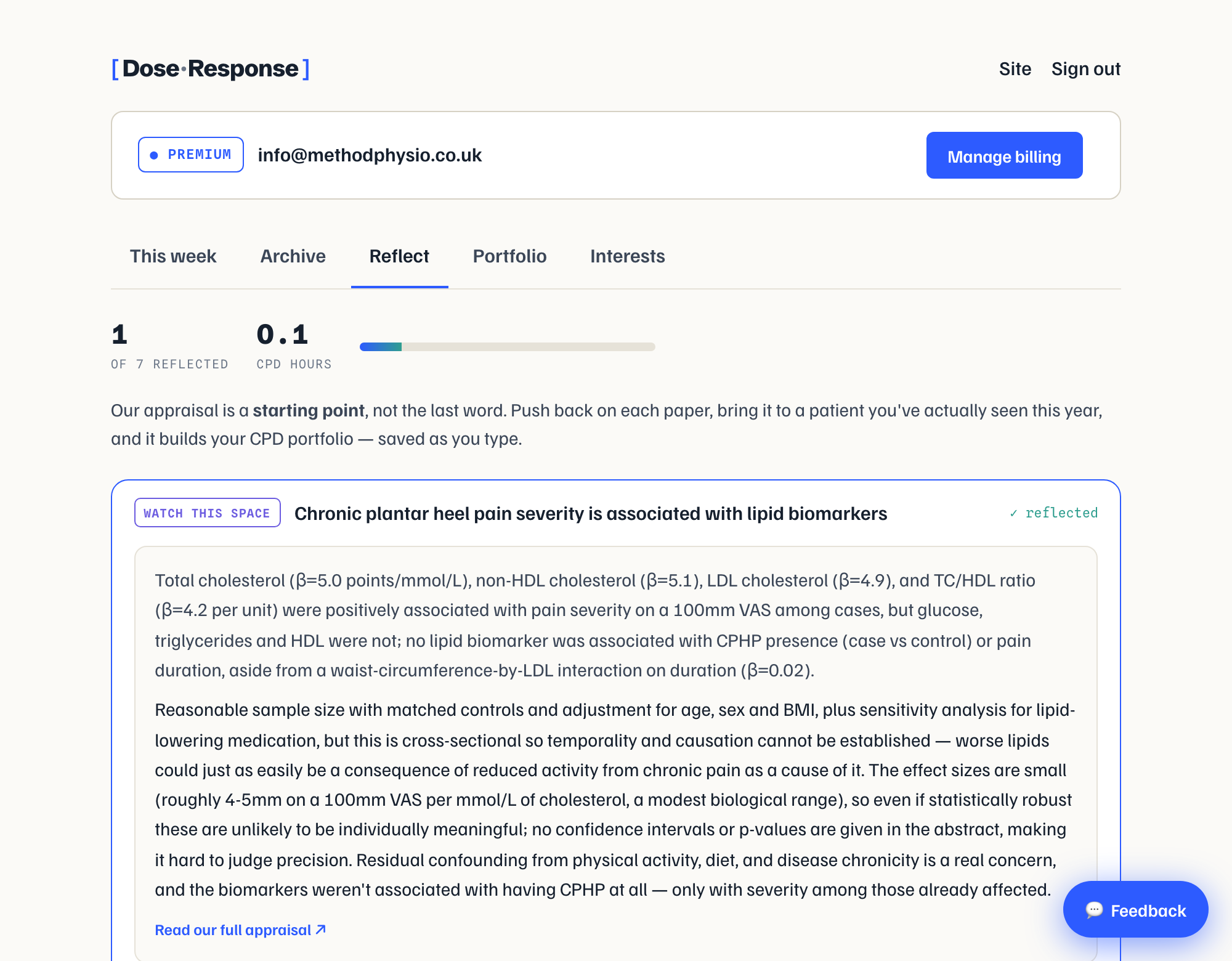
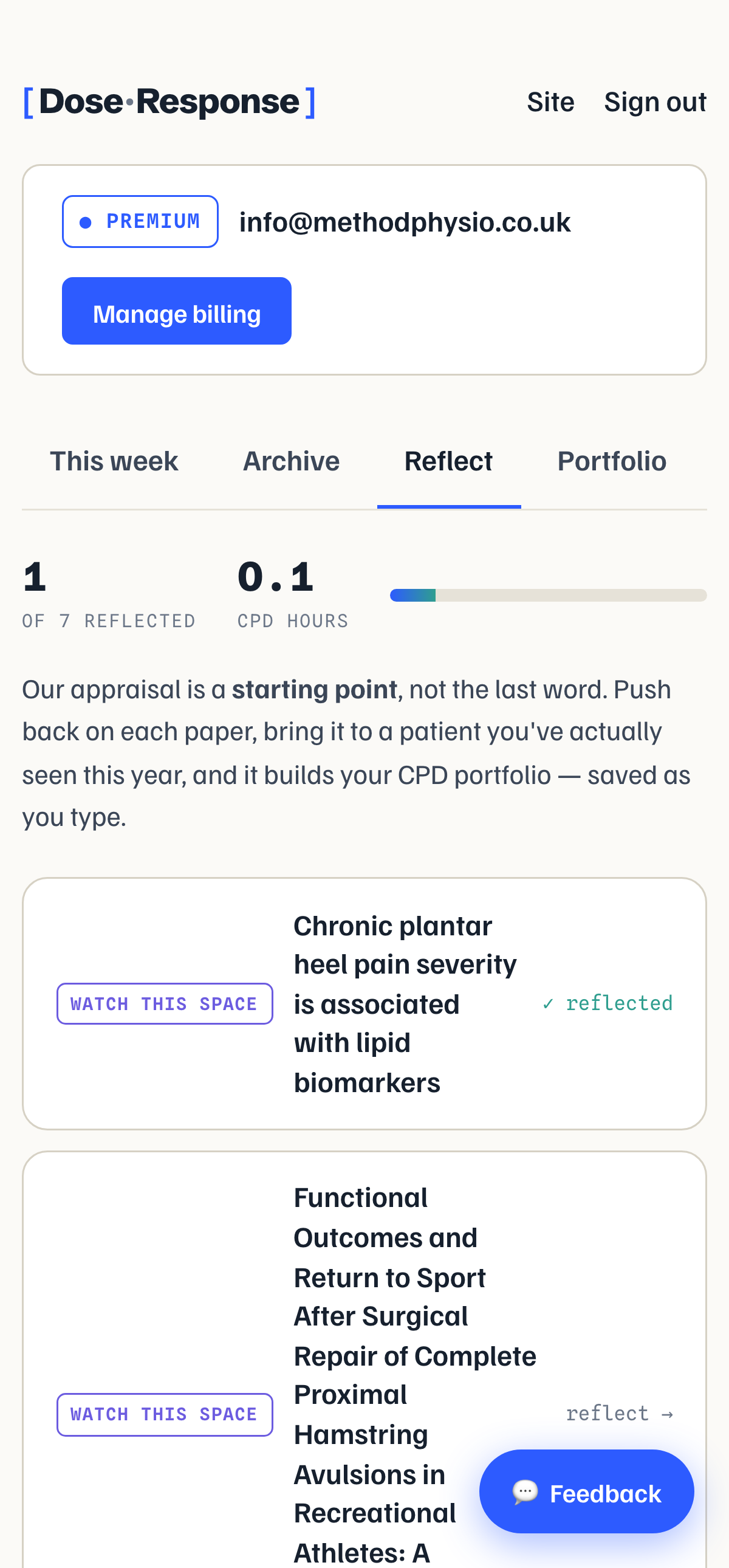
The Reflect tool, react to each appraisal and relate it to a real patient
Reflect, push back on our appraisal, bring it to a real patient.
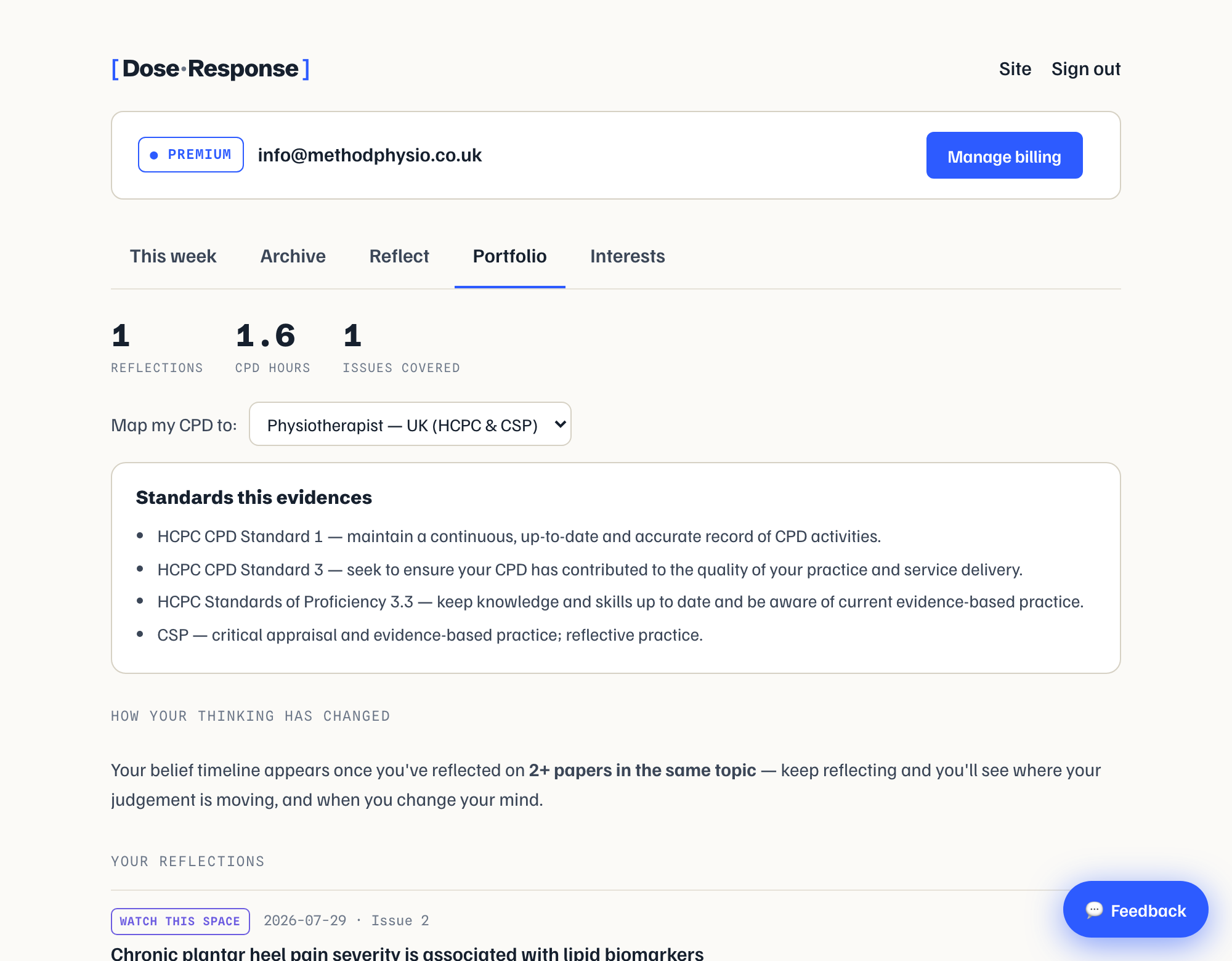
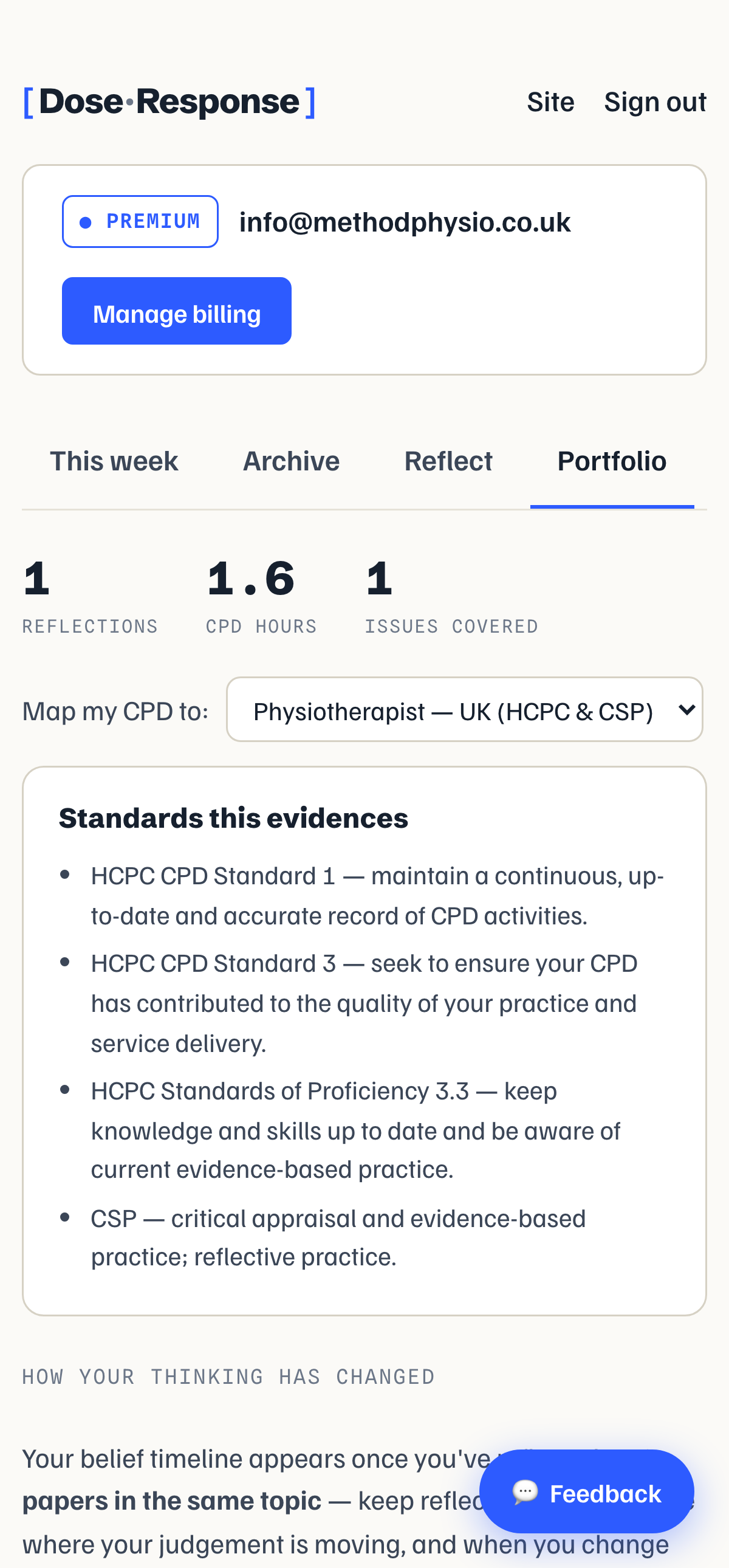
The CPD portfolio, a year of reflections mapped to your standards
Portfolio, a year of CPD, mapped and audit-ready.

Reflect, don’t just read

We hand you the critique and the provocations; you write your own, and relate it to a patient you’ve actually treated this year.

Watch your thinking change

A timeline of where your judgement has moved, and what moved it, the reflective practice regulators want to see.

One home for all your CPD

Log courses, conferences and reading alongside your reflections. Your whole CPD record lives in one place.

Verifiable certificates

Export an audit-ready portfolio; every certificate carries a reference an employer or regulator can check online.

Our promise

Your record is always yours

Your CPD is never locked behind a paywall. Pause or cancel any time and your portfolio stays read-only and downloadable, never deleted. The work you put in is yours to keep.

Built around your regulator

HCPCCSPGMCUKSCA

Tell us your discipline and we map every reflection to the standards that matter, the HCPC CPD standards and Standards of Proficiency for physios and allied health professionals, the CSP’s evidence-based and reflective practice expectations, and GMC Good Medical Practice for doctors’ appraisal and revalidation. Your export is formatted to evidence them.

04

Your CPD, in your pocket.

iOS & Android

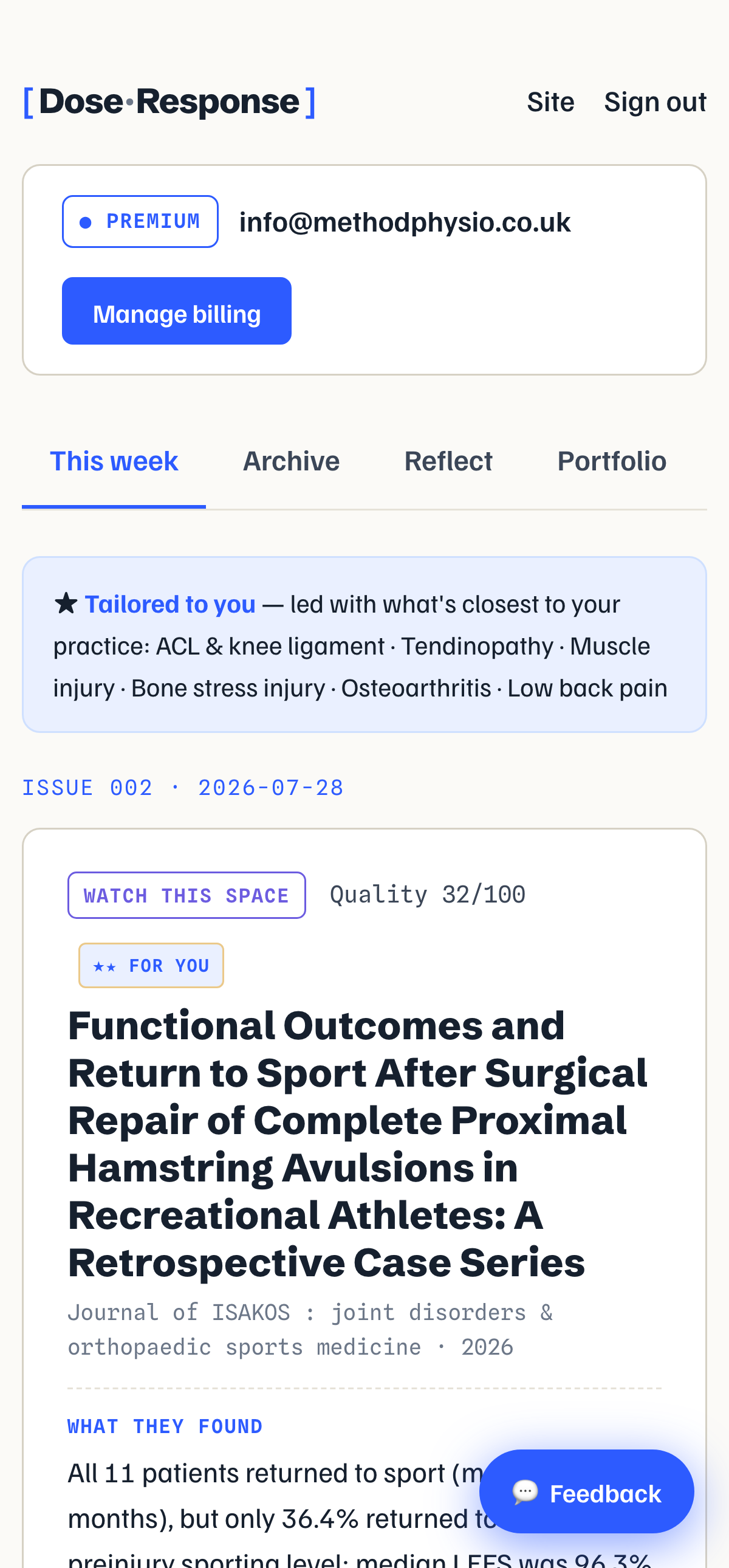
Reflect between patients, log a case at the bedside, check the workload ratio pitch-side. The whole member experience, This week, Reflect, Portfolio and your tools, as a native app.

This week's tailored issue in the Dose-Response app
The Reflect tool in the Dose-Response app
The CPD portfolio in the Dose-Response app
Download onthe App Store Get it onGoogle Play

Now on iPhone, iPad and Android. Free to download; subscribe to unlock the full member experience.

04

Free forever, or go deeper.

access

The full bulletin is free for every member, every critique in full, your CPD portfolio, Reflect, Cases and the searchable archive. Paid plans add one thing: appraise any paper you want, on demand, the same critical appraisal, run on the papers you choose, for less than a coffee a month.

Free
£0 forever

The whole bulletin and CPD suite, everything but the on-demand appraiser.

Subscribe free
  • The weekly email digest
  • Full critique on every paper, lead + all five
  • Reflect, Cases & CPD portfolio, audit-ready
  • Collections & the searchable archive
  • Tailored to your interests
Plus
£45 /year

£3.75/mo, billed annually — save 25%

Start free trial
  • Everything in Free, plus:
  • Appraise any paper you want, on demand
  • Paste a study or search PubMed, get the full critique
  • 5 on-demand appraisals / month
Most popular
Pro
£90 /year

£7.50/mo, billed annually — save 25%

Start free trial
  • Everything in Plus, plus:
  • 50 on-demand appraisals / month
  • Topic alerts → one-tap appraise (coming soon)
  • Side-by-side compare · auto-CPD prompts (coming soon)
Unlimited
£270 /year

£22.50/mo, billed annually — save 25%

Start free trial
  • Everything in Pro, plus:
  • Unlimited on-demand appraisals
  • Batch appraise a whole reading list (coming soon)
  • Living topic dashboards (coming soon)
  • Deepest appraisals + earliest features

Cancel any time, keep your CPD. If you pause or stop your membership, your reflections and portfolio stay yours, read-only and downloadable, never locked away or deleted.

Clinics, universities & teams: per-seat Plus, Pro or Unlimited on one invoice. Get in touch →

05

Standards

reviewed before publishing
“Statistically significant isn’t the same as significant. Our whole job is telling you the difference, and whether it changes anything.”

— The Dose-Response editorial team

Appraisal, not summary
Risk of bias, effect size, generalisability, the judgement layer everyone else skips.
Latest + Landmark
Every new paper placed against the foundational study it builds on or overturns.
Reviewed before it ships
The week’s research is read and appraised at scale, then every issue is reviewed before it’s published. Nothing goes out on autopilot.
Clinician treating a patient